Digital Design Theory Readings From the Field Ebook
 Book encompass Digital Design Theory: Readings from the Field, edited past Helen Armstrong
"Accessible" is generally not the beginning word that comes to listen when setting out to describe a book well-nigh design theory. However, Digital Design Theory: Readings From The Field, edited past Helen Armstrong, is beautifully comprehensible. A thoughtful collection of twenty-four essential historical and contemporary texts, the book encourages readers to reflect on ways intersecting fields and revolutions inside design practice have shaped the current land of the field of study. The drove is curtailed and understandable while it explores a diverse array of textile compiled for a broadly constituted design audition, and is aided by the Armstrong'due south additions throughout. She has advisedly called and organized these primary works, tracing the roots of gimmicky digital design in the diverse (yet convergent) disciplines of computer science, typographic blueprint, conceptual art, sustainable design, social media, and graphic blueprint.
 Inside front and dorsum cover illustration by Keetra Dean Dixon.
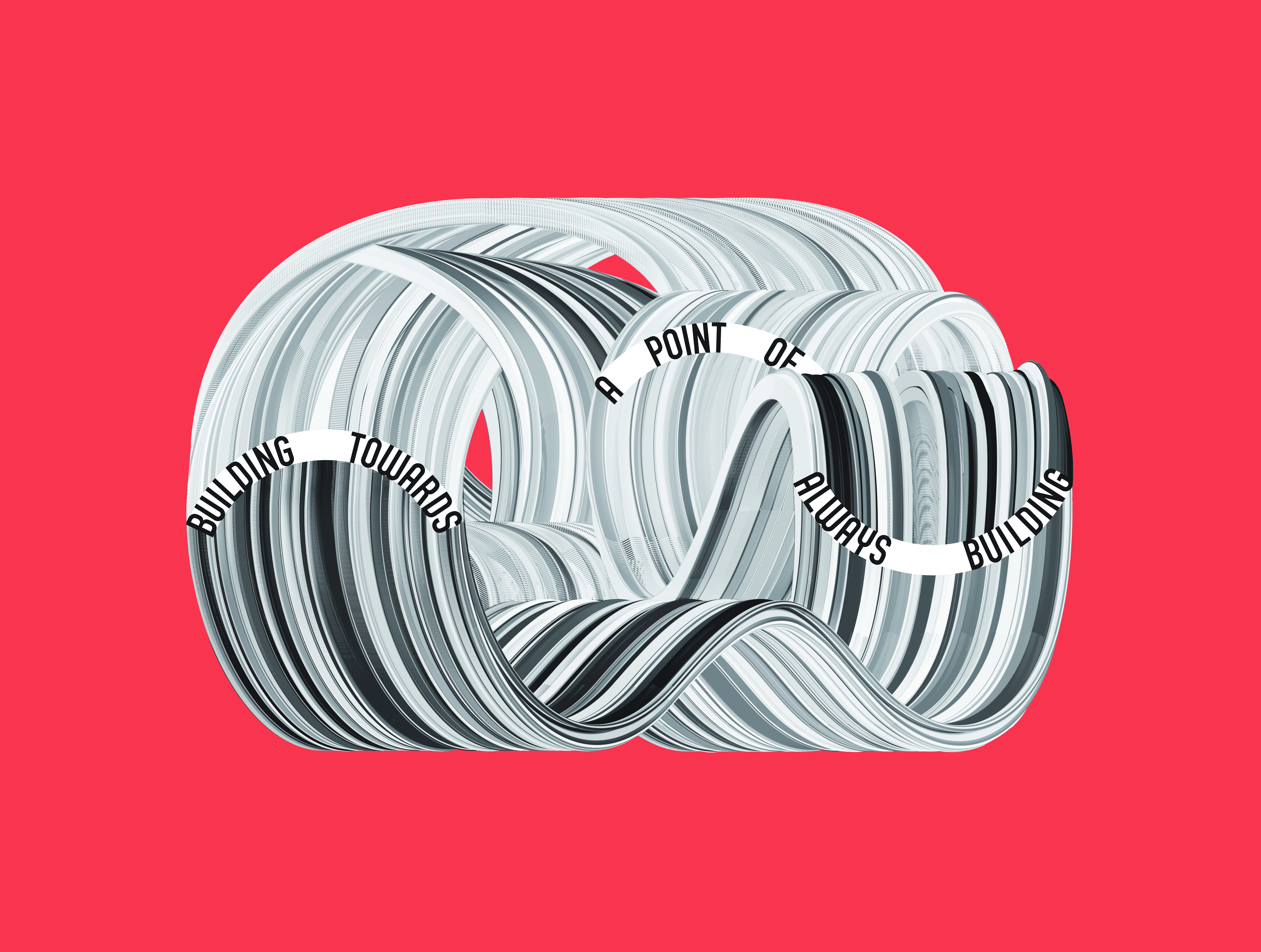 Visual Foreword by Keetra Dean Dixon.
3 colour-coded and historically progressive sections comprise the book: "Structuring the Digital," (blue) "Resisting Central Processing," (yellow) and "Encoding the Future" (blood-red). Armstrong briefly introduces each section, making an effort to frame, contextualize and thread together each various grouping of texts. The pieces themselves differ wildly in lengths: some are one-half a page, while others reach ix pages. Succinct manifestos in the first section transition to longer, more reflective essays in the second and tertiary sections. Anecdotally, information technology is interesting to annotation that all eight authors whose work is included in the "Structuring the Digital" section are male, four out of ten authors whose work is included in "Resisting Central Processing" are female, and iv out of twelve authors whose work is included in "Encoding the Future" are female. The imbalance in the outset section is maybe an historic reflection of the number of women operating in the 1960s–70s engineering infinite.
Structuring the Digital forges connections betwixt early computer processing, making and breaking grids, and other methodologically oriented fine art movements. These are all linked by the approach of setting up a system and then pushing or breaking that arrangement either intentionally by the maker or through an outside force (calculator or person). For example, in her introduction to "Doing Wall Drawings" (1971) by conceptual art pioneer Sol LeWitt, Armstrong discusses how LeWitt'due south design of his famous Wall Drawings affected the creation of his detailed plans for their execution. He created these not only as a set up of logical instructions for others to follow and execute, but was also deliberately ambiguous in some of this diction, which led to—or perhaps promoted—the idea that each participant would create her own version of the drawings and therefore have a unlike feel as she attempted to execute them in a given installation space. In LeWitt's words, "The artist must permit various interpretations of his programme." There is an piece of cake corollary to interactive blueprint here, in that one tin only create weather for experiences and must accept that almost everyone will accept something different away from the interaction. As well relating to the function of the participant, Armstrong discusses Stewart Brand's 1968 Whole Globe Catalog every bit an instigator for future DIY ("Practice-It-Yourself"), open source, and collaborative cultures.
Resisting Fundamental Processing is situated around two pivotal developments that involve the broad social introduction of new computing technology: the introduction of the Apple Macintosh computer in 1984, and public access to the Internet in the 1980s–90s. With the appearance of more circuitous computation technologies, modes of production started to become democratized. This led the work of designers to expand from being predominantly product-oriented to focus on using pattern to catalyze positive social, technological, economic, and public policy change. Writings that examine this shift contain the bulk of this section of the book, with seminal essays appearing by pioneers including Muriel Cooper, Alan Kay, and Sharon Poggenpohl.
At kickoff, these pivotal changes to the evolution of production in pattern were not uniformly embraced. These shifts placed the pressures of product preparation and cost risk on designers, sometimes putting them at an economical disadvantage. Design was streamlined (i.eastward. standardized) to conform this process as the 1990s gave fashion to the 2000s. Withal, some designers began to question how this could be used to a designer's creative advantage, partially in an effort to resist standardization in favor of more than unique, specific, or bespoke approaches. Ultimately, this move towards desktop publishing was transformative for our discipline, specifically in the area of typography. Designers taking charge of various production and dissemination methods led to more than unique and radical designs for typefaces and typographic compositions, equally evidenced in publications such as Emigré and Raygun in the 1990s and early 2000s.
The work of Alan Kay, inventor of the GUI and a co-inventor of the object-oriented programming upon which information technology is based, began encouraging the public to larn to code. The democratization of coding furthered the comprehend of digitized tools past designers and many of their collaborators. Kay'south advancement for these approaches is articulated in his piece in this section titled "User Interface: A Personal View." Armstrong ends her introductory framing of this section with the following query: "A disciplinary debate had been ignited that continues today: should designers larn to code?"
Encoding the Future investigates the ethos that if tools shape the pattern, then designers should shape the tools, as evidenced in the work and writings of Hugh Dubberly, Ben Fry, and Casey Reas. In this department, Processing is just one case of the shift in product from proprietary, costly and inaccessible means of making to networked, free, and accessible approaches. In add-on, a alter in communication from "one - to - many" to "ane - to - i" allowed for people beyond a diverse array of socio-economical and socio-cultural strata to interact. The collection of work Armstrong has gathered here tracks the eventual shift away from set systems of communications towards a "transhuman" state of existence, one where our atmospheric condition for existing and aspiring should be aided and abetted by advanced technologies. The work on offer in this department describes a watershed moment for the design process, and how information technology was forever changed due to these seismic shifts in who controls it. To wit, Armstrong writes: "In the face of exponential technological growth, we have changed our process. Nosotros paradigm, iterate, and reply instantly to user participation. Our methodology at present mimics that of software developers equally we release early and often. Influenced by open source models of collaborative making and peer-to-peer production, we hack, think, make, and improve our discipline."
Armstrong'due south curation of the entire book creates topical threads that run through all three sections. Of note are design educational activity, typographic design, systems, and pushing against the status quo. In Sharon Poggenpohl's "Creativity and Technology" essay from 1983, she identifies three bug that get in difficult for designers to bridge the gap between pattern and computation: attitudes with computer science, graphic designers' cryptic part in planning computational approaches and methods, and the overarching structure of pattern education. With regard to design education, she cites issues related to lack of funding for necessary equipment, the demand for seasoned faculty to comprehend new methods, and a force per unit area to respond to the needs of industry. Although this piece was originally published in 1983, many educators face these aforementioned issues today, and Poggenpohl provides an equally relevant reminder of our responsibleness to prepare futurity thought leaders by stating: "Finally, in the low-threat environment of the university, nosotros need to encourage run a risk-taking and tackle nontrivial blueprint projects that aid the student examine big advice bug rather than craft pedestrian objects that imitate a tradition."
This book contains many interesting and topical visual elements. Keetra Dean Dixon, who contributed the visual foreword to the book, has likewise left her marker on the end papers merely within the front and back encompass. Information technology is absolutely appropriate for these essays to be sandwiched between Dixon's labyrinthine "We push tools" / "Tools button us" slice at the (literal) open and close of the volume, as information technology echoes the advisedly woven thematic thread that permeates this collection. Her visual foreword, "Building towards a point of e'er building" is too inherently relatable to anyone participating in the always-evolving world of digital blueprint.
Calculation to the book'due south visual value is the timeline that follows Armstrong's powerful introduction. The timeline includes the "lifespan of each designer" and "publication dates of anthologized texts," which help readers sympathise, at a glance, when these designers lived and worked (many are still living), every bit well every bit the chronological points in which the noteworthy primary texts that comprise Digital Design Theory were originally written.
The "Theory at Work" chapters that conclude each of the three sections offer a rich array of visuals, providing visible examples for many of the topics, creations, and innovations discussed inside each section. Armstrong'south image captions serve as a continuation of her robust voiceover, providing boosted data that tie everything together. However, this content might exist more constructive if information technology were integrated throughout each of the volume'south three sections rather than being relegated to its own chapter. If the caption content and images were given a chip more visual prominence, it might ensure that readers do non miss or skip over these important additions to the texts. Incorporating the visual content from the "Theory at Work" chapters too might have provided an boosted opportunity for cross-referencing and illuminating connections betwixt the content inherent in each of the essays and the broader scopes of work undertaken over time past their respective authors.
In her initial introduction, section overviews, chapter introductions, timeline, and glossary, Armstrong provides helpful historical contextualization, enlightening insights, and occasional amusing anecdotal details. She furnishes just enough additional information to make the book cohesive, while leaving room for students and educators to make connections and conclusions regarding how some of these historical texts connect to present-day digital design practice on their ain. Digital Design Theory is a thought-provoking and recommended read or reference text for practicing and aspiring designers, both in and exterior of academia due to its general accessibility and the telescopic of its highly relevant material. Information technology would make an excellent form reader, and could promote interesting classroom word equally well as help students (and educators) amend sympathise the roots of our current digital landscape.
Digital Design Theory Readings From the Field Ebook
Source: https://quod.lib.umich.edu/d/dialectic/14932326.0001.211/--book-review-digital-design-theory-readings-from-the-field?rgn=main;view=fulltext
0 Response to "Digital Design Theory Readings From the Field Ebook"
Post a Comment